Bio & Archive

Dr. Doannie Tran, Co-Founder
@doannietran
Doannie taught middle school and high school science in both Oakland, California and Boston, Massachusetts, before leaving teaching to help launch the Massachusetts region of Teach For America in 2009. Doannie was responsible for professional development for all new TFA teachers in Massachusetts and he built up their partnership with Boston University, where he has also served on faculty. During that time, the Massachusetts region was in the top 10% of all TFA regions in terms of effectiveness, satisfaction and retention of teachers. While doing his doctoral work at the Harvard Graduate School of Education, he was sponsored as an Entrepreneur-in-Residence at NewSchools Venture Fund, launching an education technology company called the Teaching Genome.
Doannie left his startup to join the leadership team of Boston Public Schools as Assistant Superintendent for Academics and Professional Learning. He led the inter-departmental team that worked with the Boston Teachers’ Union to develop the Essentials for Instructional Equity, the district’s vision for instruction that would close opportunity gaps. The Essentials were recently recognized as a “bright spot” in the district by the Massachusetts Department of Elementary and Secondary Education. Before joining the team at the Center for Innovation in Education, Doannie served as the Assistant Superintendent for Innovative Programs for Fulton County, Georgia. He oversaw the design of two innovative high school models, and also supported the development of the district’s professional learning strategy based on the implementation of PLCs at every level from the Cabinet to teachers.
Currently, Doannie is the Partner for Liberatory Co-Creation at the Center for Innovation in Education where he focuses on family and community empowerment as a lever for systems change. He has helped launch community co-creation projects nationwide, bringing family and community members into co-creation with the North Dakota Department of Public Instruction, the Kentucky Department of Education, and Atlanta Public Schools. Doannie is also co-founder of the Open Systems Institute, which develops capacity of leaders to co-create and co-produce with communities.
Presentations
Published Writing
Podcasts Blog Posts



In our current education discourse, there is major debate and challenges around the ideas of “choice” and “access.” I’m very interested in the intersection between school systems that embark on choice and access initiatives and the relationship they have to creating an open system.
I invited my former colleague at Denver Public Schools, Brian Eschbacher, to join the September podcast for a conversation on these ideas:
What is a public space in education? What obligation do we have to meet unique needs?
How does the market analogy apply in education? How does it not?
How does planning and choice walk hand in hand in an open system?
We discuss how a choice and access system create opportunities for Exit, Voice and Loyalty - actions families can take to have power and agency in an open system.
What is the work of family engagement and open systems in creating real choices?
How does choice challenge old notions of community and create the potential for new forms of community?
What is the future of choice systems?

Hey everyone. I hope you had an amazing summer and are getting ready for a great school year.
While I recorded this podcast before the end of the school year, life events conspired to get in the way. But that's how things work and I'm super excited for it to come out now in August.
Wisdom is a great leader in the space. Since our podcast was recorded, his school was approved. He is an incredible speaker and thinker in working with families and bringing new people into new visions for education.


I'm really excited about our March podcast. This month we get to talk to someone who I really love working with in the open system space - Reilly Pharo Carter.
Reilly is the Executive Director of Climb Higher Colorado, an organization formed for the purpose of advancing high expectations through standards and assessments. The organization was formed with a different type of charge: to build a grasstops and grassroots coalition in support of the work. Sadly, too few organizations take on that essential work.
What's exciting about Reilly & Climb Higher is that the work has transformed into building and sustaining strong and vibrant open systems amongst the coalition members and with school districts around the state.

Welcome to the second Open System podcast! Thanks everyone for your great feedback and comments on the first podcast.
For the second podcast, I had the chance to sit down with a longtime friend and colleague, Dr. Ivan Duran. Dr. Duran is the Superintendent of Bellevue Public Schools in Washington state.
I've know Dr. Duran from our time together in Denver Public Schools, where I knew him as a champion of family engagement as a major priority while he was in charge of all elementary schools in the district.
In the podcast, we discuss why he got involved in education, why he cares about family engagement, the outcomes of best practice open system work and how he thinks about ensuring the entire system prioritizes the work.

Welcome to our first Open System podcast!
Each month we will be interviewing and highlighting someone special, interesting and captivating in the Open System space.
For our first podcast, we are very fortunate to have Natalie Lewis, Kansas City School Board Member and fellow Flamboyan National Family Engagement fellow. Check out her bio here. During the discussion, we dive into what drives her, why she joined the school board, her thoughts on family engagement and why she cares about the work.
Please send any feedback or thoughts my way. It's my first experience podcasting and sharing out. I'm hoping each time I'll get better at questions/interviews and also at the technical components. So thank you for going on the journey!

Part one of a four-part series on co-creation & co-production
An emergent and trendy term in education discourse, especially in family engagement spaces, are the ideas of “co-creation” and “co-production.” Some have even intoned that this work is the next generation of education work. It is the work “to do with” rather than “to do for” or “to do to", and integral to the Open System.
It’s a big idea, fraught with challenges yet called for in our current education history and moment. For too much of the past century of education improvement initiatives (catalogued by Jal Mehta in his book, The Allure of Order) the work of reform has been too often top-down or driven by technocrats inspired to impose a system upon others. While there are genuine exceptions to this rule (and sometimes examples folks claim lack of input are actually embedded deeply in community participation) co-production and co-creation of education systems has not been a priority over the past century.
The Open System rejects this course of action entirely. It values open public processes, democratic governance and the merging of perspectives and power as the way to guide the system toward a better end. Built into the Guiding Principles (indeed, it is listed as Principal 1!) of the Open System site is the idea “Co-Creation & Co-Production In All Things.” I’ve been encouraged as other education advocates have begun to speak about co-creation and co-production more often, and realized I a piece that lays the theoretical and practical groundwork would be the right way to start.

After this first experience, the thought stirred in others and me - what if we could do this better? It wasn't a new idea at all - school conversations about performance are old hat. But there was something different about this in an era of common data systems, district wide choice and transparent conversations about school performance. Ideas for improvement percolated. What about even more family friendly documents? What about even more prioritized support from the central office? Better coordination around external advocacy partners. The result could be a whole new dynamic between families and our schools. We could be establishing a new beachhead in engagement system - the regular and clear public accountability commitment of schools and their leaders to the community.
The power also seemed electric from a social change perspective. You could imagine thousands of parents, all across the city during the same window in time having conversations with other parents about performance: an open network of parents exercising their right to know. Powerful.

I’d like to make the (not so radical) argument that we’ve reached a serious, deep inflection point leading towards openness, from global to local systems. From the World Trade Organization to the local library, the systems that form our society’s foundation were built for another time and place —not the moment of “transparency, authenticity, access” that Dell describes. And while it may feel that the wall builders and closed system cheerleaders are winning; I’d argue there is another truth. That more and more people are thinking in a global construct of openness. That we are implementing more and more open policies that push us toward a freer exchange of ideas and power. But as the world moves toward openess, supporters of the closed system status will push back harder than ever. To break through this resistance, we must push even farther, opening elements across all of our system. And I believe the most important place to do this work in is education, right now.
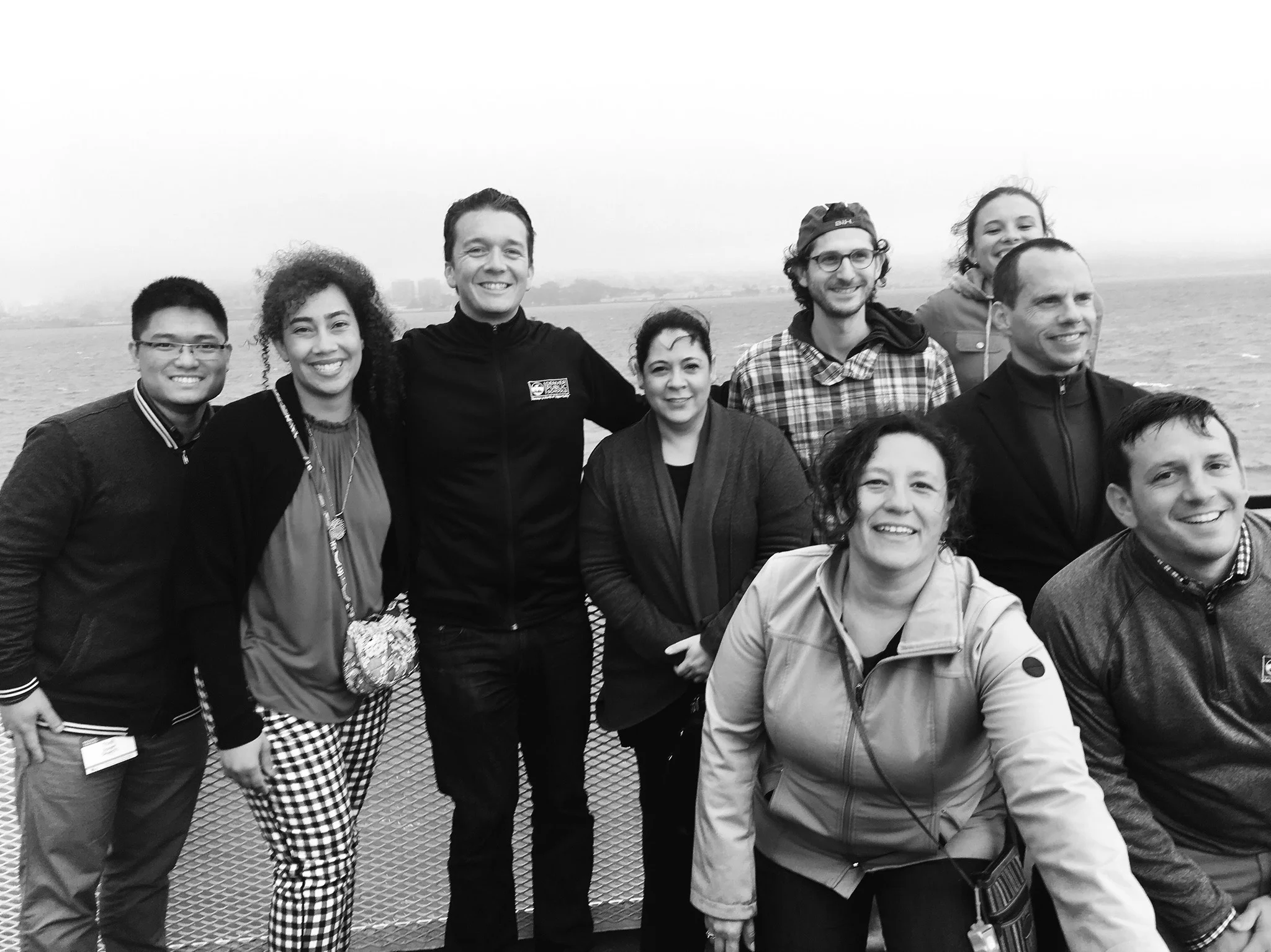
I’ve always found it ironic that those of us in the family and community engagement space are often lonely people. Not by choice (because usually we’re extroverts) but because of the way systems usually think about family and community engagement.
You see, within our districts, schools, and organizations, we are usually the only ones charged with the responsibility of working with families and parents. School systems typically have a handful of folks charged with this responsibility. Very rarely do they have budgets, and even more rarely do they have missions and purposes focused on the broader opening work.
How wild is it then, that the very people often charged with “building community” or working with “the people” find themselves alone in the system, fighting major battles against decades of system dispositions? Changing a system to think about openness is no small matter and it’s really the responsibility of everyone—not just one person.

This story begins in 1920s Mexico. My grandmother’s parents were living in Zacatecas right after the Mexican Revolution. My great-grandfather found himself embroiled in a tumultuous situation when he was accused of stealing. A noose was put around his neck and he was ready to die. At the very last minute, a local man ran up and told everyone that my great-grandfather wasn’t the thief; the crime was committed by a recently-apprehended criminal.
After that, my great-grandfather decided to flee Mexico and move his family to Colorado.